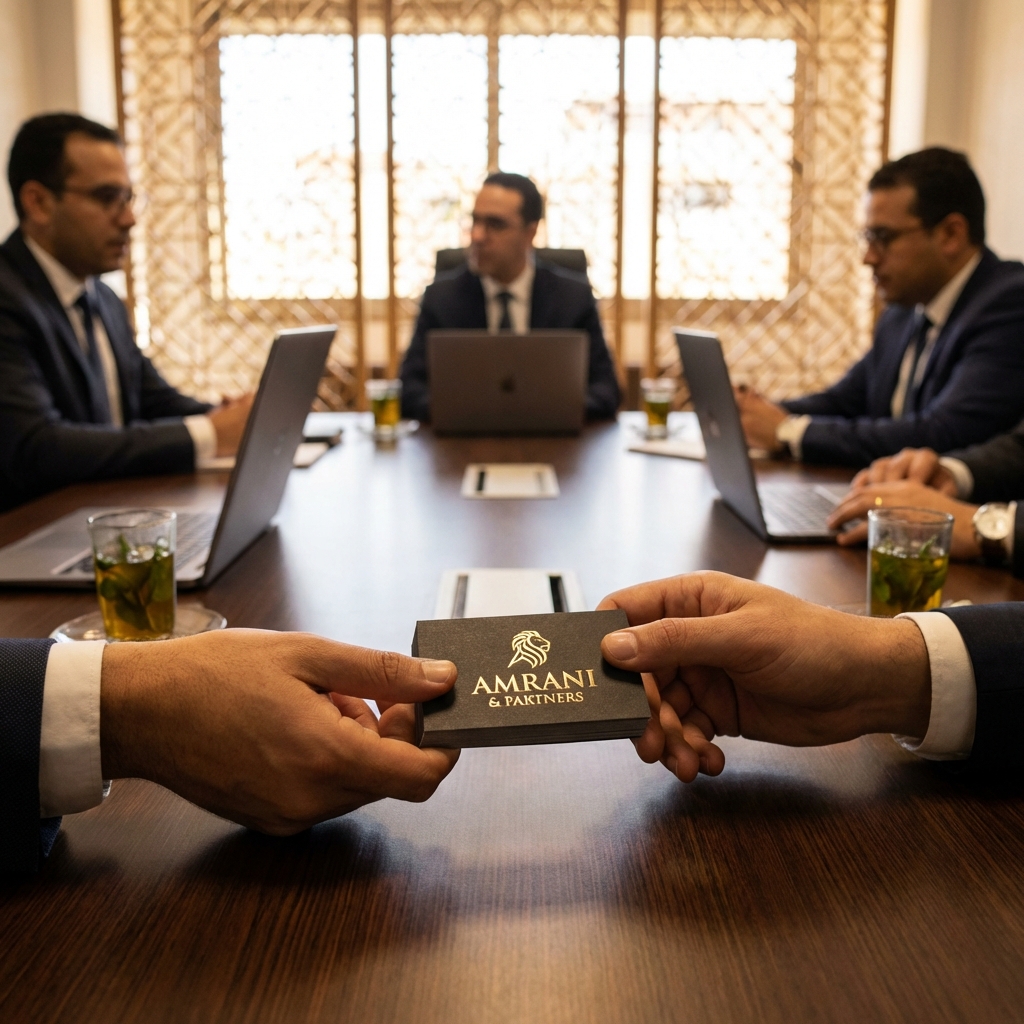
In an increasingly digital world, one might think the humble paper business card has become obsolete. Yet, in Morocco as elsewhere, it remains a fundamental tool for professional networking. Why does this tool stand the test of time?
1. The Exchange Ritual in Morocco
In Morocco, business relations are deeply human. Before discussing contracts or partnerships, contact is established and exchanges are made. Handing over a business card is part of this implicit social code. It's a gesture of openness that says: "I am ready to connect with you". Not having one during an important meeting or networking event in Casablanca or Rabat can be perceived as a lack of preparation.
2. Trust (Niya) and the Tangible
Digital is volatile. A LinkedIn profile can be modified in a second. A physical business card, printed on high-quality paper (350g weight, matte or glossy finish), is a tangible object that remains. It embodies the reality of your business. For many Moroccan professionals, receiving a quality card is a first sign of seriousness and stability.
3. Standing Out from the Crowd
Imagine a networking event. You meet 20 people. 15 tell you to "add me on LinkedIn", 5 give you a card. The next day, who will you remember? Probably the person who left you that card with a unique design, a pleasant texture ("Soft Touch"), or an eye-catching selective varnish.
A well-designed card is a mini billboard that continues to work for you long after the conversation ends. That's why design should never be left to chance.
Conclusion
Digital and paper are not enemies; they are complementary. But for the first contact, paper retains the advantage of immediacy and personal branding. Never underestimate the power of this little paper rectangle.